
Dubai's AED 18bn Al Khail Corridor: What It Means for Business Bay, Meydan and Al Quoz Property
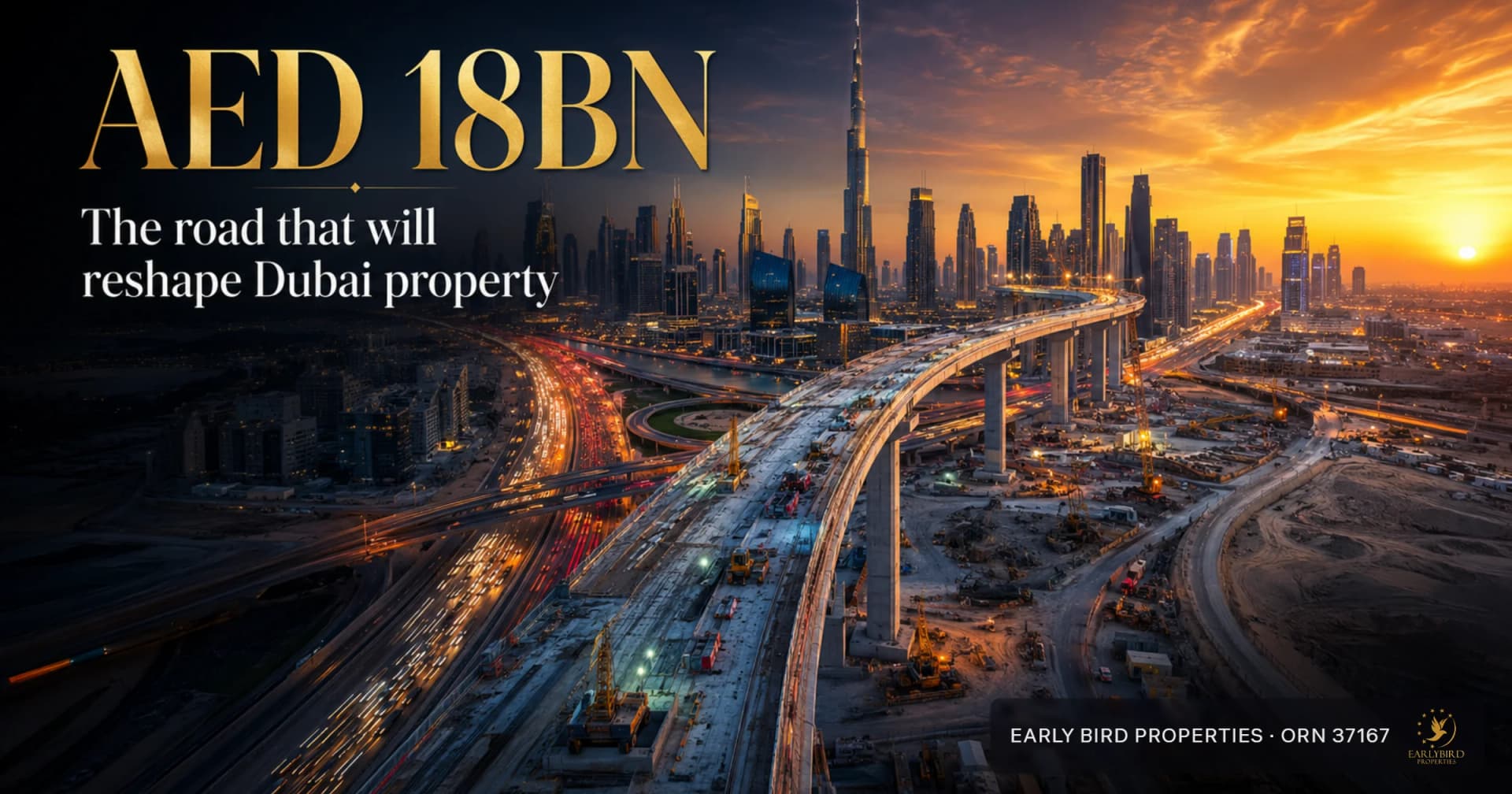
On 1 July 2026, Sheikh Hamdan bin Mohammed, Crown Prince of Dubai and Chairman of the Executive Council, approved an AED 18bn (~$4.9bn) infrastructure package whose centrepiece is "First Al Khail Street" — a 15km elevated corridor running parallel to Sheikh Zayed Road (The National; Dubai Media Office, 1 July 2026). Once built, it is expected to cut Sheikh Zayed Road's peak travel time by 51 percent (Khaleej Times, 1 July 2026). Officially, it serves an area of 2.6 million people across four named districts: Al Barsha, Al Quoz, Business Bay and Meydan. Only two of those four — Business Bay and Meydan — are straightforwardly freehold for foreign buyers today. This is Early Bird Properties' walk-through of what was approved, who can actually buy where, and what past Dubai transport upgrades measurably did to nearby property prices.
This article uses CBRE's Dubai Metro Report 2023, a 2017 peer-reviewed study in the Journal of Transport and Land Use, and the official 1 July 2026 announcements. The historical figures relate to Metro-adjacent property, not roads — we flag that distinction throughout. Forecasts are attributed to named sources. Our interpretation is labelled as opinion. This is data reporting, not investment advice.
What exactly was approved, and when will it be built?
The approval is real and dated. What it is not yet is finished, or even started. Here is the project as officially described, with nothing added: a new elevated corridor named "First Al Khail Street", 15km long, three lanes in each direction, running parallel to Sheikh Zayed Road — a distinct project from the existing Al Khail Road, and the two should not be confused. It adds roughly 9,000 vehicles per hour of capacity and is projected by officials to cut Sheikh Zayed Road's peak-hour travel time by 51 percent (Khaleej Times, 1 July 2026).
| Milestone | Detail | Source |
|---|---|---|
| Executive Council approval | 1 July 2026 | The National; Dubai Media Office |
| Construction start | Q3 2027 | ARN News Centre; Dubai Media Office |
| Construction completion | Q4 2030 | ARN News Centre; Dubai Media Office |
| Added capacity | ~9,000 vehicles/hour | Khaleej Times, 1 July 2026 |
| Peak travel-time cut (Sheikh Zayed Rd) | 51% | Khaleej Times, 1 July 2026 |
Two honesty points worth flagging early. First, construction does not begin until Q3 2027 and is not due to finish until Q4 2030 — this is a multi-year build, not a near-term catalyst. Second, RTA route maps, interchange locations and construction phasing have not been published as of this writing, so any claim about which specific streets or buildings sit "corridor-adjacent" is limited by what official sources have actually released. If you are weighing a purchase timed around infrastructure like this against buying resale property today, our comparison of off-plan and resale strategies for 2026 walks through the trade-offs in depth.
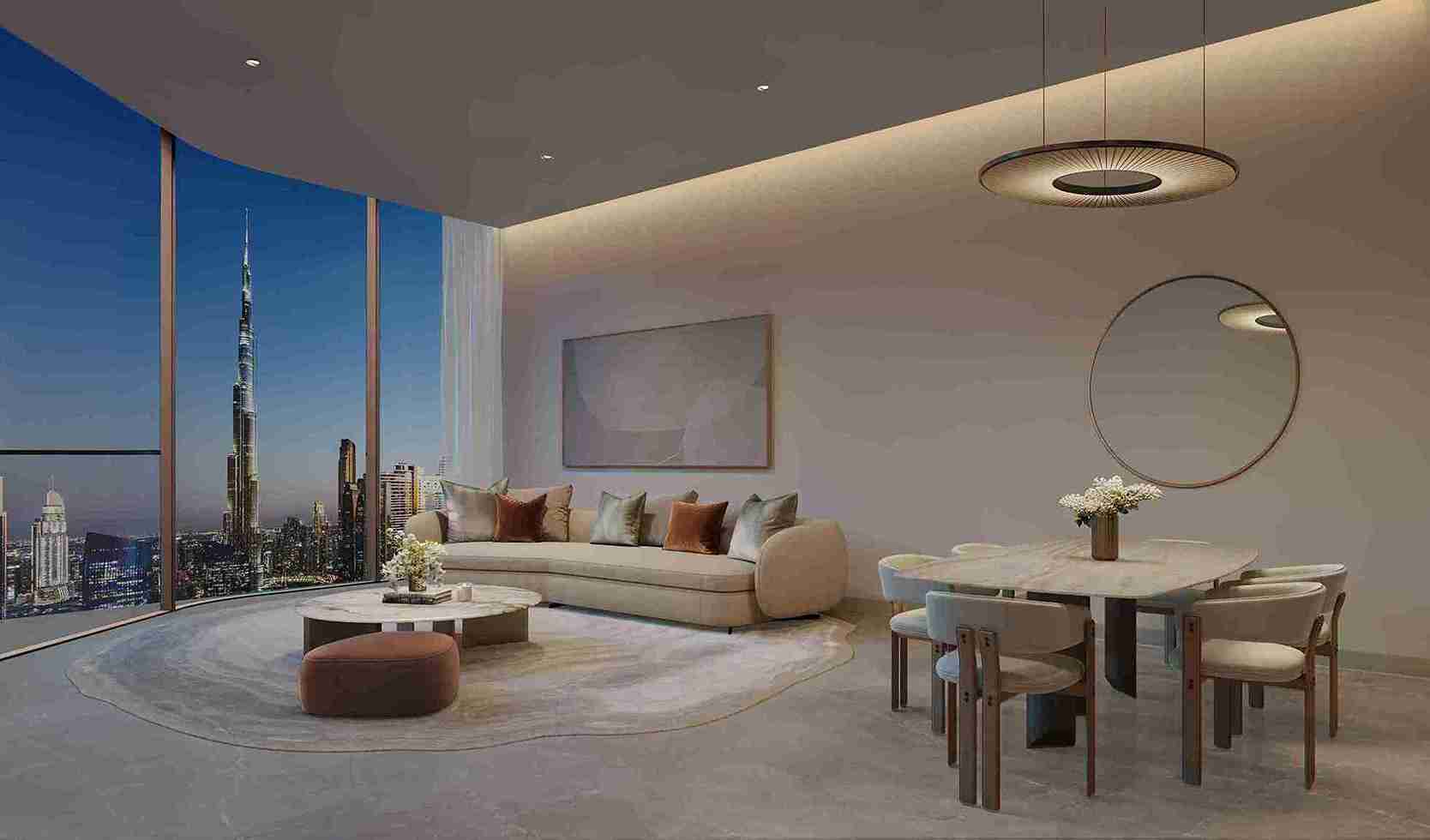
Sol Luxe Tower on Sheikh Zayed Road — the artery the new corridor runs parallel to
Which of the four named areas can foreigners actually buy in?
This is the part that gets glossed over in most coverage, and it matters more than the headline number. Being "served" by a corridor and being legally purchasable by a foreign investor are two entirely different things in Dubai. Here is the freehold status of each of the four officially named areas, stated plainly:
| Area | Freehold status | Typical property type |
|---|---|---|
| Business Bay | Freehold — foreigners can buy | High-rise apartments, canal-front towers |
| Meydan / MBR City (District One, Sobha Hartland) | Freehold — foreigners can buy | Villas, mansions, luxury apartments |
| Al Quoz | Mixed — mostly industrial/non-freehold; the Al Khail Heights sub-zone IS freehold | Apartments and townhouses (Al Khail Heights only) |
| Al Barsha (1/2/3 proper) | Generally NOT freehold for foreigners — leasehold / UAE-national zones | Villas, low-rise buildings |
Two areas — Business Bay and Meydan — are unambiguous freehold zones where international buyers can purchase outright. Al Quoz is more nuanced: the district as a whole remains largely industrial, but the Al Khail Heights pocket within it is a genuine freehold community, and it sits squarely inside the corridor's named catchment. Al Barsha proper is generally not open to foreign freehold ownership.
It is worth being clear about what we are not claiming. Arjan and Dubai Hills Estate sit near Al Barsha and are genuinely freehold, but neither is named as an official corridor beneficiary in any government or media coverage of this approval. If you see those areas marketed as "First Al Khail corridor" opportunities, treat that as adjacent-area speculation, not an official designation. For a broader look at how Dubai's freehold map breaks down by district, see our guide to choosing the best location for property investment in Dubai.
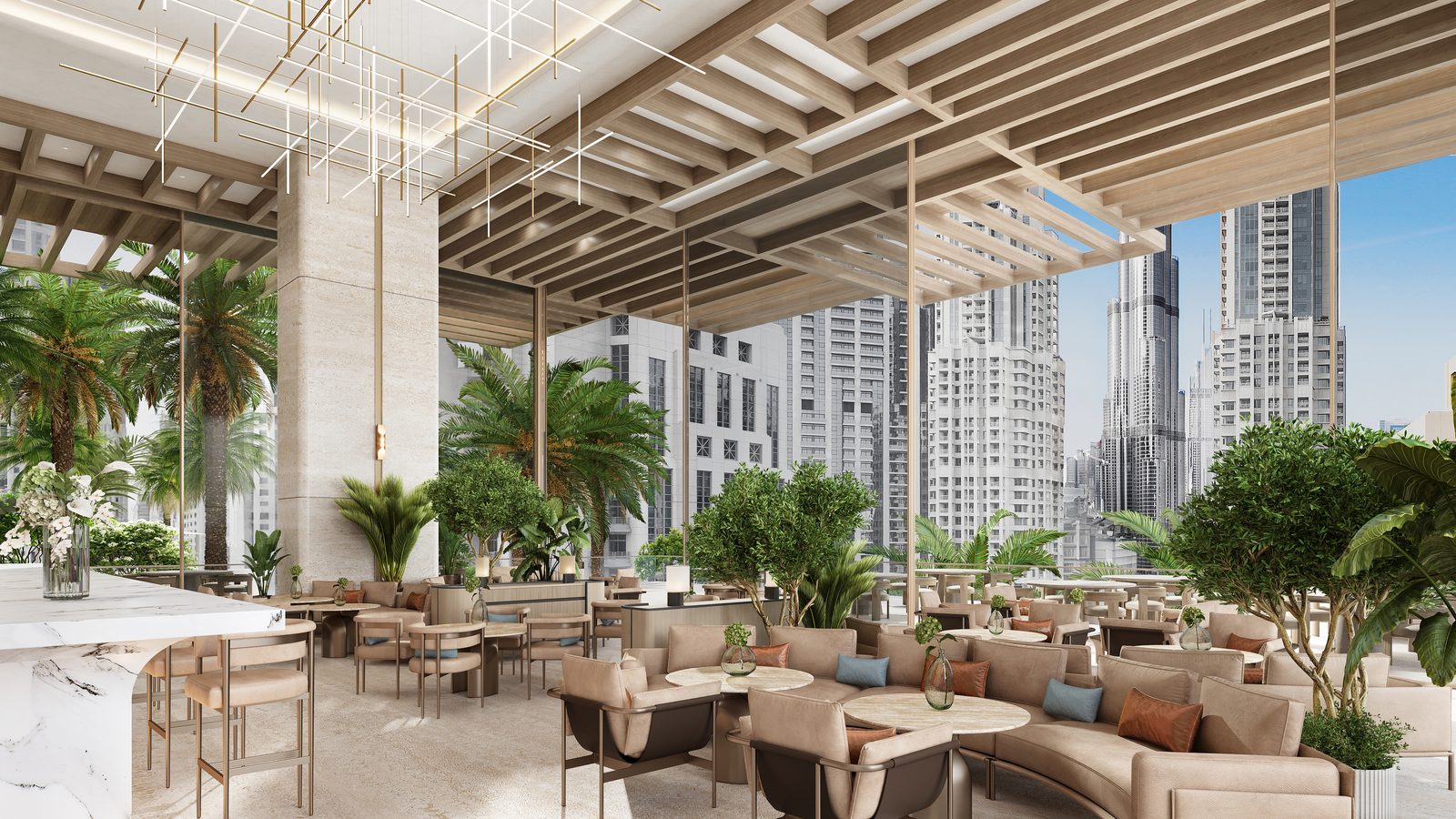
Fairmont Residences Solara Tower, Downtown Dubai — neighbouring Business Bay, one of the corridor's four named districts
What does new transport infrastructure historically do to Dubai property values?
This is the question that actually matters for anyone weighing a purchase, and it deserves a precise answer rather than a marketing one. The best available evidence comes from CBRE's Dubai Metro Report 2023 (published April 2023), which analysed more than 300 properties across Q1 2010 to Q4 2022. Its headline finding: residential prices within a 15-minute walk of a Red Line Metro station grew 26.7 percent, against 24.1 percent Dubai-wide over the same period (CBRE; The National, 18 April 2023; Khaleej Times).
The report also broke the effect down by walking distance, and the pattern is not what many people assume — the closest properties to a station were not the biggest winners. Prices within a 0–5 minute walk grew 35.8 percent, while the 10–15 minute band grew 43.8 percent, the highest of all bands. Individual areas within the 15-minute catchment saw far larger moves over the study period: Barsha Heights +77 percent, JBR +50.1 percent, Downtown Dubai +47.4 percent and Dubai Marina +33.1 percent.
A separate peer-reviewed study — Mohammad, Graham and Melo, published in the Journal of Transport and Land Use (2017) — used a difference-in-differences design, a method that compares price changes near a new transit line against price changes farther away to isolate the transit effect. It found Dubai Metro proximity lifted property values by 13 percent for residential and 76 percent for commercial property in the 701–900 metre catchment of stations.
The honesty requirement we hold ourselves to: both of these are Metro studies. No published consultancy report or academic study has measured what a Dubai road upgrade — as opposed to a rail line — does to property values, and Route 2020 (opened 2021) has no clean before-and-after study either. A 15km elevated road changes drive times and capacity, not walkability, which is the mechanism most transit-value research measures. We present the Metro data as the closest measured precedent for a Dubai "connectivity premium" — not as a prediction for First Al Khail Street. Claims like "up to 30 percent price boost" that circulate in property marketing are unsourced, and we are not repeating them.
What did the rent side show when infrastructure arrived?
Price appreciation is only half the story CBRE's data tells — the rental side is arguably the more interesting half, because it shows resilience rather than just growth. Using roughly 112,000 Ejari rental registrations from Q1 2018 to Q4 2022, CBRE found rents on Metro-adjacent properties rose 5.7 percent over the period, while the Dubai-wide average rent actually fell 4.1 percent over the same years (CBRE; The National, 18 April 2023).
That gap — positive 5.7 percent against negative 4.1 percent — is roughly a ten-percentage-point difference in relative performance, and it occurred during a soft rental cycle. It suggests proximity to core transport infrastructure worked as a defensive characteristic when the wider market weakened, not just an accelerant when it boomed. For investors thinking about income rather than only appreciation, that is the more relevant data point — our 2026 rental yields breakdown covers how current yields compare across Dubai's freehold districts.
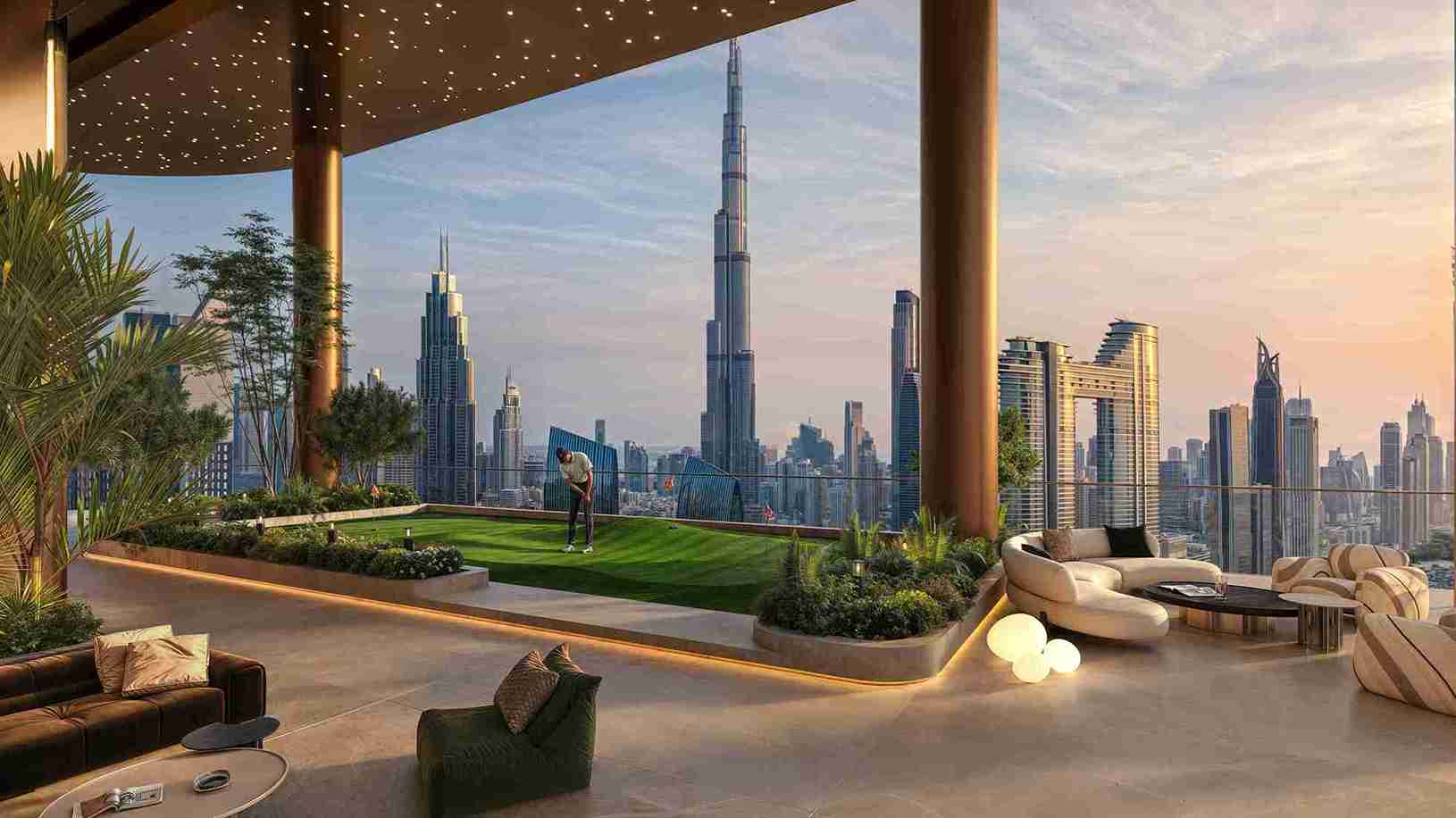
Residences along the Sheikh Zayed Road corridor, where peak travel time is set to fall 51%
Should I buy near the First Al Khail corridor before construction starts?
The timing logic, stated plainly: construction starts Q3 2027 and completes Q4 2030. If the Metro precedent is any guide — and it is a precedent, not a promise, and it is rail data applied to a road project — the largest gains in CBRE's study accrued to owners who held through the build period as the project de-risked toward completion. That is a multi-year hold, not a quick flip, and 2027–2030 covers most of a full market cycle by itself.
The construction reality: a 15km elevated corridor built in phases from Q3 2027 means years of active works adjacent to Al Barsha, Al Quoz, Business Bay and Meydan — noise, dust, altered access and diversions are a normal part of any project this size. That is a real near-term cost to livability which the historical appreciation data does not capture separately.
No guarantees, by area: Business Bay and Meydan are already mature, actively traded freehold markets — the corridor is one input among many (supply pipeline, demand, rates, building quality), not the only price driver. Al Khail Heights, as a smaller freehold pocket, could see either a more pronounced relative move or more volatility precisely because it is thinner and less liquid — that cuts both ways. Buyers comparing payment-plan entry points along this artery can see a live example in our Sheikh Zayed Road off-plan 50/50 payment plan guide.
Our read, labelled as opinion: buying purely on the corridor announcement, years before route and interchange details are published, is a higher-conviction, higher-patience bet than buying on fundamentals you can verify today — rental demand, existing transport links, building quality, developer track record. The corridor is a genuine tailwind to factor in, not a reason on its own.
Which buyer profile fits which corridor area?
Business Bay — the investor's pick. Freehold high-rise stock, an established rental market and canal-front positioning make it the area most suited to buy-to-let investors wanting liquidity: easy resale and a deep pool of comparable transactions.
Meydan / MBR City — the villa and luxury buyer's pick. District One and Sobha Hartland cater to end-users and long-hold investors wanting villas, mansions or premium apartments in a lower-density, master-planned freehold community.
Al Khail Heights (within Al Quoz) — the value-entry pick. A smaller freehold pocket inside a largely non-freehold district; it may suit buyers seeking a lower entry price with corridor exposure, accepting a thinner, less liquid market than Business Bay or Meydan. Al Barsha itself, given its general non-freehold status, is not a direct buy option for most international investors — its relevance here is mainly as a reminder to verify freehold status before assuming an "official corridor area" is purchasable.
What Early Bird Properties is watching next
In practical terms, here is what we are tracking as this project moves toward construction — and what we honestly do not know yet. Launch pricing along the corridor: as developers with inventory in Business Bay, Meydan and Al Khail Heights start referencing the corridor in marketing, we are watching whether asking prices move ahead of any construction milestone. Interchange announcements: official coverage names four served districts but no specific access points; when the RTA publishes route-level detail, it will materially sharpen which streets genuinely benefit. Route and phasing detail — currently unpublished: until a public route map exists, precise "this building benefits most" claims should be treated as provisional. Independent road-effect studies: all our historical evidence is Metro-based; we will be watching for consultancy or academic work that measures road-corridor effects specifically.
For wider 2026 pricing context: Knight Frank forecasts around 3 percent growth in Dubai's prime segment and around 1 percent in the mainstream segment for 2026 (The National, December 2025) — a forecast, not a guarantee, and one that predates this announcement.
Weighing a corridor-area purchase? Talk it through with us — free, no pitch
Frequently Asked Questions
Is Business Bay freehold?
Yes. Business Bay is a fully freehold area, meaning foreign nationals can buy property there outright. It is one of only two districts officially named in the First Al Khail Street corridor coverage — alongside Meydan — with unambiguous freehold status for international buyers.
When will the First Al Khail Street corridor be completed?
Construction is scheduled to start in Q3 2027 and complete in Q4 2030, per ARN News Centre and the Dubai Media Office. The project was approved on 1 July 2026, so there is roughly a one-year gap before ground is broken.
Does property near new transport infrastructure appreciate more in Dubai?
Historically yes, for Metro-adjacent property specifically. CBRE's 2023 report found residential prices within a 15-minute walk of a Red Line station rose 26.7 percent (2010–2022) versus 24.1 percent Dubai-wide. No equivalent published study exists yet for road corridors like First Al Khail Street.
Is Al Barsha freehold for foreign buyers?
Generally, no. Al Barsha 1, 2 and 3 are mostly leasehold or UAE-national ownership zones rather than open freehold. The Al Khail Heights sub-zone within neighbouring Al Quoz is freehold, but Al Barsha proper is not — a distinction worth checking carefully before any purchase.
What is the difference between First Al Khail Street and Al Khail Road?
They are two separate things. Al Khail Road is Dubai's existing highway; First Al Khail Street is a new 15km elevated corridor running parallel to Sheikh Zayed Road, approved on 1 July 2026 with construction from Q3 2027. Do not conflate the two when researching either.
Should I buy now based on this announcement?
That depends on your timeline and risk tolerance — this is not investment advice. Construction runs Q3 2027 to Q4 2030, RTA route maps are unpublished, and the appreciation evidence comes from Metro projects rather than roads, so treat the corridor as one factor to weigh, not a promise.
Methodology & disclosure: project facts are sourced from the 1 July 2026 announcements by the Dubai Media Office and named UAE media; historical value data from CBRE's Dubai Metro Report 2023 and a 2017 peer-reviewed Journal of Transport and Land Use study, with periods stated inline. Metro-based figures are precedent, not a prediction for a road project, and are labelled as such. No developer marketing fees influence this analysis; our reads are based solely on alignment with buyer and seller interest. This is data reporting, not investment advice.
 Muhammad Zohaib Saleem — Founder, Early Bird Properties (RERA / DLD ORN 37167). In Dubai real estate since 2013.
Sources: The National & Dubai Media Office (1 Jul 2026) for the AED 18bn approval; Khaleej Times (1 Jul 2026) for corridor specifications; ARN News Centre for the construction timeline; CBRE Dubai Metro Report 2023 (via The National, 18 Apr 2023, and Khaleej Times) for Metro-adjacent price and rent data; Mohammad, Graham & Melo, Journal of Transport and Land Use (2017) for the academic estimate; Knight Frank (via The National, Dec 2025) for 2026 forecasts. Figures relate to the periods stated; Metro data is precedent, not a road-project prediction. Early Bird Properties does not provide investment advice.