
The Inheritance Loophole: How to Protect Dubai Assets for Your Heirs via DIFC Foundations
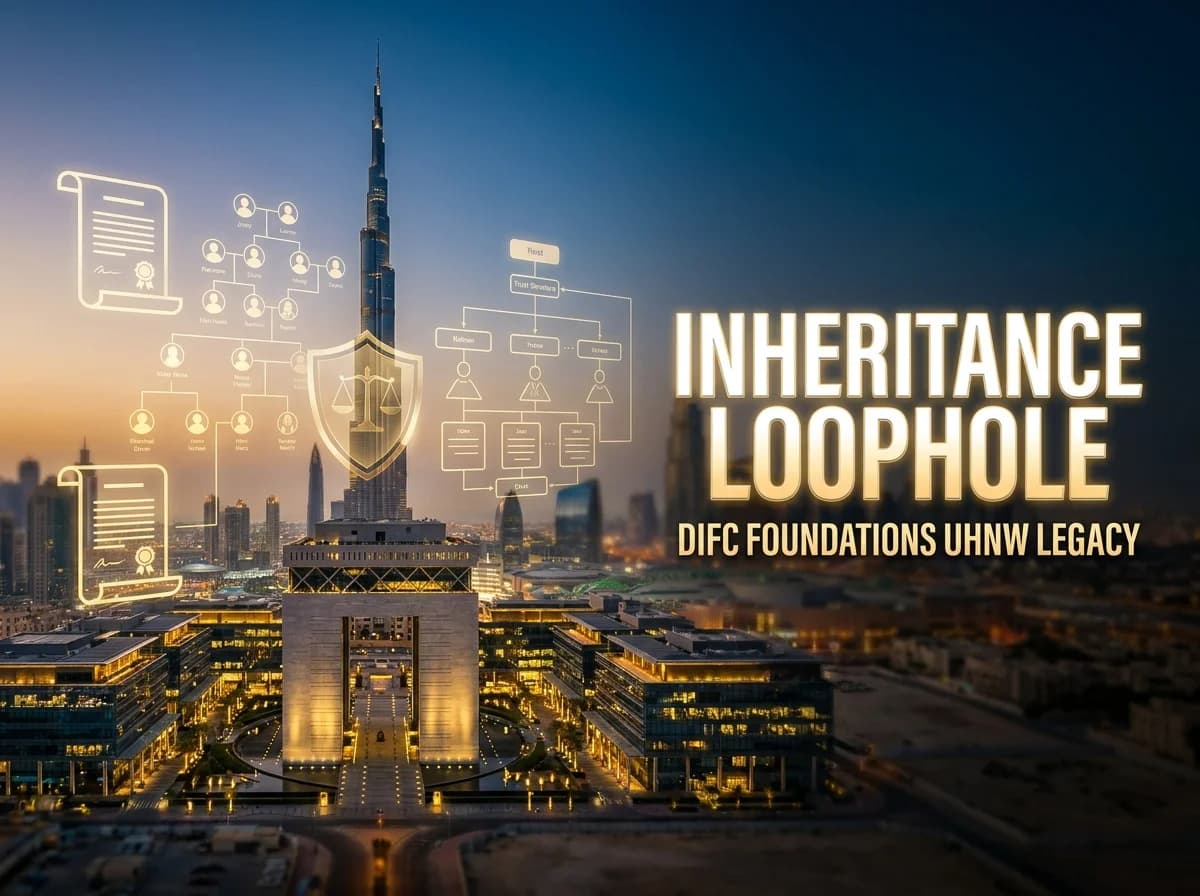
For the ultra-high-net-worth individual (UHNWI), wealth is not merely about accumulation; it is about preservation and transition. When investing in the UAE—a global hub of growth and luxury—most investors focus on the immediate ROI of Dubai real estate and business ventures. However, the most sophisticated investors focus on the "Exit Strategy": Succession.
In the UAE, the intersection of Civil Law, Sharia Law, and the Common Law of the DIFC creates a complex legal landscape. For a foreign national, dying intestate (without a recognized will) can lead to assets being distributed according to Sharia principles, which may conflict with the investor's personal wishes or their home country's laws.
This is where the DIFC Foundation emerges not just as a legal tool, but as a strategic "loophole" that allows investors to decouple their assets from the complexities of mainland probate and Sharia-based distribution.
The Core Conflict: Why Traditional Wills are Insufficient for Billionaires
To understand why a Foundation is necessary, one must first understand the limitations of the traditional Will in the UAE.
The Sharia Law Variable
Under UAE law, Sharia principles generally apply to the distribution of assets for Muslims. For non-Muslims, recent reforms have allowed for the application of the law of their home country or a registered will. However, the execution of these wills is where the friction occurs. If a will is contested or found invalid, the default fallback in many cases is the application of Sharia law, which has fixed quotas for heirs. For a billionaire who wants total control over their legacy, this variability is a critical risk.
The Probate Trap
Probate is the legal process of proving a will is valid. In many jurisdictions, including the UAE mainland, probate can be a slow, public, and expensive process. For a billionaire with a portfolio of luxury villas, commercial towers, and private equity, a probate delay of several months (or years) can lead to:
- Asset Freezing: Bank accounts and corporate shares may be frozen until the court certifies the heirs.
- Liquidity Crises: Heirs may be unable to access funds to maintain the assets, leading to missed payments or operational failures in businesses.
- Public Exposure: Wills often become part of a public record during probate, stripping the family of their privacy and exposing their net worth to the public.
The "Fragmentation" Risk
Traditional inheritance often splits assets among multiple heirs. If a family-run business is split between five different heirs with different visions, the business often collapses due to internal conflict. A Will distributes ownership, but it does not provide governance.
Decoding the DIFC Foundation: The Sovereign Wealth Model
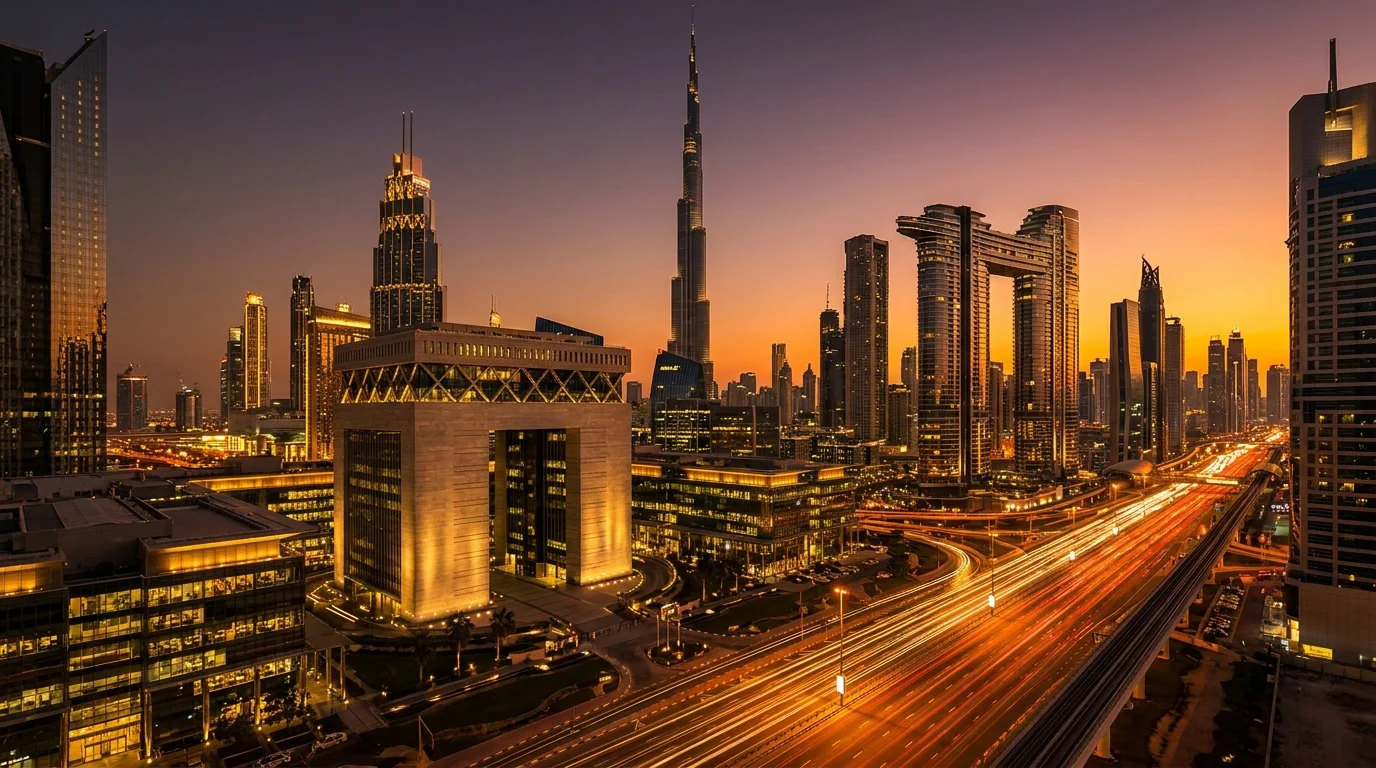
The DIFC financial free zone operates under English Common Law
The Dubai International Financial Centre (DIFC) is a "financial free zone" with its own independent legal system based on English Common Law. This is the critical distinction. A DIFC Foundation is a unique legal entity. It is not a company, and it is not a trust. It is a "body corporate" that possesses its own legal personality.
How it Differs from a Trust
In a traditional Trust (common in the UK or US), there is a separation of legal and beneficial ownership. The trustee holds the legal title, and the beneficiary holds the right to the assets.
A Foundation, however, owns the assets itself. It does not "hold" them for someone else; it owns them in its own name, governed by a Charter (its constitution) and Bylaws (its operational rules). This makes it more robust and easier to recognize globally than a trust, as it is a registered legal entity.
The Mechanism of the "Loophole"
By transferring assets (real estate, shares, cash) into a DIFC Foundation, the investor effectively removes those assets from their personal estate.
When the founder passes away, the assets do not "transfer" to the heirs—because the Foundation still owns them. The heirs simply step into their roles as beneficiaries or members of the Foundation Council. There is no probate, no court intervention, and no Sharia-based redistribution, because the asset owner (the Foundation) never died.
Strategic Advantages of the Foundation Structure
For the UHNWI, the Foundation provides four pillars of security:
1. Absolute Governance and Control
The founder can dictate exactly how the wealth is managed. Instead of a simple "who gets what," the founder can create a Family Constitution within the bylaws:
- Conditional Inheritance: "Heirs receive 2% of the fund annually, but only after completing a university degree or starting a business."
- Veto Power: "The eldest child manages the real estate, but all sales over $10M require a unanimous vote from the Council."
- Philanthropic Mandates: A portion of the wealth can be permanently dedicated to a specific cause, ensuring the family name is associated with a lasting legacy.
2. Asset Segregation and Creditor Protection
A DIFC Foundation creates a "firewall" between the investor's personal liabilities and the family legacy. If a founder faces a lawsuit or business failure in another part of the world, assets held within a properly structured Foundation are generally protected from personal creditors. This "ring-fencing" is a cornerstone of institutional wealth management.
3. Privacy and Discretion
Unlike a will, which may be read in court, the Charter and Bylaws of a DIFC Foundation are private documents. The public sees a legal entity owning a building; they do not see the internal family dynamics, the amount of wealth, or the specific distribution of assets.
4. Perpetual Succession
A company's shares might be transferred, but a Foundation can exist indefinitely. It allows a family to maintain a "Dynasty" structure, where the wealth grows across generations without being chipped away by inheritance taxes or legal disputes every time a generation passes.
Implementation Framework: From Personal Ownership to Foundation

Family Council governance — where the bylaws are written
Moving a multi-million dollar portfolio into a Foundation is a surgical process. It requires three primary phases:
Phase I: The Structural Design
Before any paper is signed, the founder must define the roles:
- The Founder: The person creating the foundation.
- The Council: The governing body (similar to a Board of Directors) that manages the assets.
- The Guardian: A "watchdog" who ensures the Council follows the Founder's original wishes.
- The Beneficiaries: The heirs or entities who benefit from the assets.
Phase II: The Asset Migration
Assets are transferred from the individual's name to the Foundation.
- Real Estate: Title deeds are transferred to the Foundation.
- Equity: Shares of mainland or offshore companies are reassigned.
- Liquid Assets: Bank accounts are opened in the name of the Foundation.
Phase III: The Governance Layer
The creation of the Bylaws. This is the most critical document. It defines the "rules of the game" for the next 100 years, covering everything from voting rights to the process of adding new family members and the triggers for asset distribution.
Comparative Analysis: Will vs. Trust vs. Foundation
| Feature | Traditional Will | Common Law Trust | DIFC Foundation |
|---|---|---|---|
| Legal Entity | No | No | Yes |
| Probate Required? | Yes (Slow) | No | No (Immediate) |
| Governing Law | Local/Home Law | Trust Law | DIFC Common Law |
| Asset Ownership | Personal | Trustee | The Foundation |
| Privacy Level | Low | Medium | High |
| Control | Static | Fiduciary | Constitutional |
Risk Mitigation and Compliance (The "Due Diligence" Layer)
For the billionaire investor, compliance is not an afterthought; it is a necessity. Using a DIFC Foundation requires a clear understanding of:
AML and KYC (Anti-Money Laundering)
The DIFC has some of the strictest compliance standards in the world. Moving assets into a Foundation requires full transparency regarding the Source of Wealth (SoW) and Source of Funds (SoF). This rigorous process, while tedious, is exactly what gives the structure its legitimacy and international recognition.
The "Sham" Trust/Foundation Risk
If a founder retains too much control (e.g., treating the Foundation's bank account as a personal piggy bank without following the bylaws), a court could potentially deem the Foundation a "sham." To avoid this, UHNWIs must employ professional corporate service providers to ensure the "corporate veil" remains intact.
FAQ
Can a DIFC Foundation be used to avoid Sharia law in Dubai inheritance?
Yes. By transferring assets into a DIFC Foundation, the assets are owned by a legal entity governed by DIFC Common Law. Since the Foundation does not "die," the assets do not trigger probate or Sharia-based distribution laws, allowing the founder's bylaws to dictate the succession.
Is a DIFC Foundation better than a Will for Dubai real estate?
For UHNWIs, yes. A Will requires probate, which can freeze assets and expose the family to legal delays. A Foundation ensures an immediate and private transition of control to the heirs without court intervention.
Who manages the assets in a DIFC Foundation?
The assets are managed by the Foundation Council. The founder can appoint family members, professional advisors, or a corporate entity to the council, ensuring the assets are managed according to a specific strategic mandate.
What is the cost of setting up a DIFC Foundation?
Costs vary based on the complexity of the assets and the governance required. However, for billionaires, the setup cost is negligible compared to the risk of probate delays or the potential loss of assets through fragmented inheritance.
Can I change the beneficiaries of my Foundation after it is created?
Yes, depending on how the Charter and Bylaws are written. Most foundations allow the founder to reserve the power to amend the bylaws or change beneficiaries.
Final Strategic Verdict
The "Inheritance Loophole" is not about evading the law; it is about selecting the correct legal jurisdiction. By leveraging the DIFC's Common Law framework, billionaires can transform their wealth from a vulnerable personal estate into a professional, institutional legacy.
In a city as dynamic as Dubai, the only thing more valuable than the assets themselves is the certainty that those assets will reach the intended heirs without friction.
Muhammad Zohaib
Founder & CEO of Early Bird Properties with 13+ years of Dubai real estate experience. RERA certified.