
Dubai Flexi Rent vs "Rent Now, Pay Later": Who Can Actually Pay Monthly in 2026?

On 23 June 2026 the Dubai Land Department launched Flexi Rent, a framework under which participating property-management companies can let tenants pay rent monthly, quarterly or semi-annually instead of the traditional one-to-four-cheque structure. Seven weeks later, on 13 August, the Arabic daily Emarat Al Youm reported that DLD is preparing a second scheme, "Rent Now, Pay Later", in which a bank pays the landlord a full year's rent upfront and the tenant repays the bank over up to twelve months at zero interest. The first scheme is live. The second is proposed, with a September target and no published rules. Neither means every tenant in Dubai can now pay monthly — and if you are renewing or signing a lease in the next few months, the difference between the two matters more than the headlines suggest. This article sets out who each scheme actually covers, what has and has not been announced, and the questions to ask before you agree to a monthly plan.
Methodology: every fact below is taken from the Dubai Land Department's own Flexi Rent page and 23 June release, or from named UAE press reports dated 23 June to 25 August 2026. Where a detail has not been published — and for Rent Now, Pay Later most have not — we say so rather than guess.
What Flexi Rent is, and what it is not
Flexi Rent is not a law and it is not a tenant right. DLD describes it as "a programme launched by Dubai Land Department to enable property management companies to offer more flexible payment options to tenants." The key word is enable. DLD sets the framework and signs cooperation agreements; the companies decide which of their vacant or eligible units to enrol, which payment plans to offer, and on what terms. The agreed terms are then written into the tenancy contract. DLD's own FAQ is explicit that it does not manage the contracts or the payments — the participating company does.
Participation is voluntary. DLD's 23 June launch release named eleven partners: portfolio owners and managers such as Wasl Properties, Deyaar Property Management and Dubai Investment Real Estate, alongside eight property-management and brokerage firms, and the partner list has grown since. The current programme page is DLD's Flexi Rent initiative. If your landlord is a private individual with one apartment, or a company that has not signed up, Flexi Rent does not apply to your lease — whatever the building's name.
Where it does apply, the eligibility rules published by DLD are short:
✓ Apartments, villas, offices and retail units may be eligible.
✓ The tenant must be a UAE resident with valid residency documentation.
✓ The tenancy must be for a minimum of twelve months.
✓ The unit must be one the participating company has chosen to include.
Payment frequency is "monthly, quarterly or semi-annual, depending on the participating company's offerings" — so a company may offer quarterly on one building and monthly on another. Press reports at launch said payments could be made by credit card, debit card or cheque. The agreements also allow partners to attach "rental incentives, discounts, or promotional packages" for new tenants under their own policies, which is worth knowing when you negotiate.
| Standard lease | Flexi Rent | Rent Now, Pay Later | |
|---|---|---|---|
| Status (Aug 2026) | Default for most leases | Live since 23 June 2026 | Proposed; September 2026 target; rules not published |
| Who pays the landlord | Tenant, by cheque or as agreed | Tenant, in instalments agreed with the managing company | A partner bank pays the full year upfront |
| Who the tenant owes | Landlord | Landlord / managing company | The bank, over up to 12 months |
| Frequency | Negotiated cheque count | Monthly, quarterly or semi-annual | Instalments, reported as up to 12 months |
| Interest / fees | No financing charge | Not published by DLD — set in the contract | Reported as zero interest; fees not announced |
| Who decides | Landlord and tenant | The participating company, unit by unit | Eligibility not yet announced |
| Where to apply | With the landlord or agent | Directly with the participating company, at signing or renewal | Not yet announced |
Sources: DLD Flexi Rent page (updated 19 August 2026) and 23 June 2026 release; Khaleej Times 23 June, 2 July and 25 August 2026; Emarat Al Youm via Khaleej Times and Gulf News, 13–14 August 2026.

Rent Now, Pay Later: what has been announced, and what has not
The second scheme is different in kind. Under Flexi Rent, the tenant still pays the landlord — just more often. Under Rent Now, Pay Later as reported on 13 August, a participating bank pays the landlord the full annual rent at the start of the tenancy, and the tenant repays the bank in instalments over a period of up to twelve months, with no interest charged. DLD is reported to be developing the service "in partnership with a local bank". The bank has not been named.
That is the whole of what has been published. What has not been announced, as of 26 August 2026, is the list that decides whether the scheme is useful to you: who is eligible, how to apply, the exact repayment terms, whether any processing or administrative fee applies, and how a missed instalment is treated. Gulf News reported on 13 August that "the final mechanism is still being developed" and that details are expected when the service officially launches, which is targeted for September.
Two points follow from the structure, and they are inferences from the reported design rather than published rules. First, a landlord receiving twelve months upfront has no cash-flow reason to refuse a monthly tenant — which is why this scheme could reach private landlords that Flexi Rent, by design, does not. Second, the tenant's obligation moves from a landlord to a bank. A rent instalment owed to a bank is a credit obligation, and how it will be assessed, documented and enforced is precisely the part that has not been released. Until it is, treat Rent Now, Pay Later as a scheme to watch, not one to plan a lease around.
Who can actually pay rent monthly in Dubai right now?
In August 2026 the honest answer depends on three things: who manages your building, whether you are a resident, and when your lease renews.
You rent from a participating company
This is the only group with a live, published route to monthly rent. Ask at signing or at renewal. Ali Sharif Al Marzooqi, Vice President of Property & Community at Deyaar Properties, told Khaleej Times that "eligible tenants can express their interest in Flexi Rent during the leasing process for a new tenancy or when renewing an existing contract." Expect the company to tell you which plans apply to your specific unit; a building being on the partner list does not mean every unit in it is enrolled.
You rent from a private landlord
Nothing has changed for you yet. Your cheque count is still a negotiation, and the leverage in that negotiation is the same as it was last year: the landlord's alternative options, the market rent for the unit, and what the RERA calculator allows on renewal. If your landlord is proposing an increase alongside a change in payment terms, check the legal ceiling first — our guide to the Dubai rental index and legal rent increases walks through the calculation. Rent Now, Pay Later is the scheme that could eventually reach this group, but it is not available today.
You are not a UAE resident, or you want a short lease
Flexi Rent requires valid residency documentation and a minimum twelve-month tenancy. A newcomer on an entry permit, someone between visas, or anyone wanting a six-month lease is outside the published criteria, regardless of the landlord. Eligibility for Rent Now, Pay Later has not been announced.
What paying monthly changes for your budget — and what it does not
Monthly rent solves a cash-flow problem, not an affordability problem. The annual figure in your contract is still the annual figure; a monthly plan spreads it, it does not shrink it. DLD's published material does not say whether companies may price a monthly plan differently from an annual cheque, and the agreements explicitly allow partners to set incentives and packages under their own policies. So the first number to get in writing is the total for the year under each option you are offered, not the monthly amount.
The comparison that does change is against buying. A large part of the appeal of off-plan payment plans has always been that a monthly instalment looks like rent. If rent itself becomes monthly for more tenants, that comparison gets more honest — and the fees, service charges and handover balloon that the adverts leave out matter more, not less. We set the two monthly numbers side by side in our rent vs own guide for Dubai payment plans.
For landlords, the calculation runs the other way. A single cheque is a year of certainty; twelve payments are twelve chances for a delay. That is why many private owners still resist monthly terms, and why Rent Now, Pay Later — which hands the owner the full year upfront — is the scheme landlords will watch most closely. If you own a unit and are weighing a monthly tenant against a vacancy, our guide to renting out an apartment in Dubai covers the net-yield side of that decision.
Five questions to ask before you agree to a monthly plan
✓ Is this unit enrolled in Flexi Rent, and which frequencies are offered on it specifically — monthly, quarterly or semi-annual?
✓ What is the total annual rent under each option, and does any incentive or discount apply to one and not the others?
✓ How are the instalments collected — card, cheque or transfer — and what happens, in the contract's own words, if one is late?
✓ Will the same terms be offered at renewal, or is this a first-year package?
✓ Is the Flexi Rent arrangement written into the Ejari-registered tenancy contract, not a side letter?
That last question is the one we would not sign without. DLD's framework works by putting the agreed terms into the tenancy contract; a payment arrangement that lives only in an email is far harder to enforce, and may not be recognised in a rental dispute.

What we are telling tenants at Early Bird
Three things. First, if you rent from a company on DLD's list and your renewal is between now and the end of the year, ask about Flexi Rent now — before the renewal notice, not after — and get the answer for your unit in writing. Second, if you rent privately, do not delay a renewal decision waiting for Rent Now, Pay Later; the rules are unpublished and the September date is a target, not a commitment. Third, whichever route you take, the annual total is the number that matters, and it is the one most likely to move when the payment terms do.
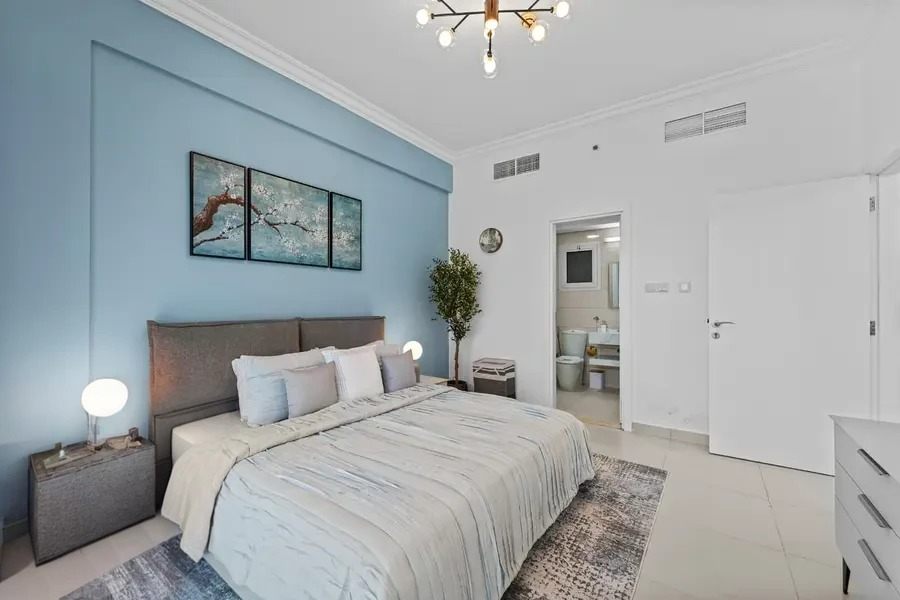
The apartments pictured in this article — in Business Bay and Dubai Silicon Oasis — are units we have let; you can see current and recent rentals on our Dubai rentals page, including The Residences at Business Central and TIMEZ by Danube.
Frequently asked questions
Can every tenant in Dubai now pay rent monthly?
No. Flexi Rent, live since 23 June 2026, only applies where the property-management company has joined DLD's programme and has chosen to enrol your specific unit; participation is voluntary. Tenants of private landlords and non-participating companies still negotiate cheque terms as before. Rent Now, Pay Later, which could widen access, is proposed for September 2026 and has no published rules yet.
Is Rent Now, Pay Later available in Dubai yet?
No. As of 26 August 2026 it is a proposed service, reported on 13 August by Emarat Al Youm and confirmed in outline by Khaleej Times and Gulf News: a partner bank pays the landlord a year's rent upfront and the tenant repays the bank over up to twelve months at zero interest. The bank, eligibility, application process and fees have not been announced; launch is targeted for September.
Do I need a UAE residence visa to use Flexi Rent?
Yes. DLD's published criteria require the tenant to be a UAE resident with valid residency documentation, on a tenancy of at least twelve months, in a unit that a participating company has enrolled. Someone on an entry permit or between visas falls outside those criteria. Whether Rent Now, Pay Later will have a residency requirement has not been announced.
Does Flexi Rent change how much rent I pay?
DLD's material does not say, and that is the point to check. Flexi Rent changes the frequency of payment; the annual amount is whatever your tenancy contract states, and participating companies may attach their own incentives or packages to particular plans. Ask for the total annual rent under each frequency offered and compare those totals, not the monthly figures.
How do I apply for Flexi Rent?
Contact the participating property-management company directly, either when signing a new lease or when renewing, and ask which payment plans apply to your unit. The company presents the available arrangements, you choose one, and the agreed terms are written into the tenancy contract. DLD does not process applications or manage the contracts itself; its Flexi Rent page lists the partner companies.
Can my landlord refuse to accept monthly rent?
Yes. Neither scheme obliges a landlord to accept monthly payments. Flexi Rent is voluntary for companies and applies unit by unit; a private landlord is not part of it at all. Payment frequency in Dubai remains a contractual term agreed between the parties, and any renewal increase is separately capped by the RERA rental index calculation.
Renewing or moving in the next few months?
If you want a second opinion on a lease — the payment terms, the renewal increase, or whether the unit you are being offered is actually enrolled in Flexi Rent — we will look at the contract with you before you sign.
Speak to us on WhatsApp or book a free 15-minute consultation.
Muhammad Zohaib Saleem — Founder, Early Bird Properties (RERA / DLD ORN 37167). In Dubai real estate since 2013.
No developer marketing fees; recommendations based solely on investor interest alignment. Every scheme detail above carries its source and date; details of Rent Now, Pay Later are as reported and remain subject to DLD's official launch announcement. This is general information, not legal or financial advice.