
Dubai Property Transaction Digital Platform 2026: Minutes, Not Months

On 7 July 2026, Dubai Land Department (DLD) won the Best Pioneering Initiative Award for "Tamallak+," a fully digital property-transaction platform that DLD reports can register some property sales in as little as five minutes — a process that in most of the world still takes days or weeks. The award, granted under the Hamdan bin Mohammed Programme for Government Services, is the government's formal nod. For buyers and investors, the more useful question is simpler: what does a minutes-not-months registration system actually change about buying property in Dubai in 2026?
Key takeaways
- What it is: Tamallak+ is DLD's digital transaction platform — AI-driven property valuation, instant sales registration, and developer self-registration, with no in-person visit required.
- The headline claim: DLD reports some sales completing "in as little as five minutes," an 88% cut in service-completion time, and 96.5% customer satisfaction. These are DLD's own reported figures, not independently audited.
- Why it's fast: DLD says its systems are now linked with 59 major developers and 30 banks, so ownership, financing and registration data move between parties automatically instead of by hand.
- The global frame: Digitised land registries roughly halve transfer times worldwide; even fast digital economies still measure completion in days. Dubai is pushing the frontier on speed.
- The buyer's job doesn't shrink: Faster registration is not faster due diligence. Valuation checks, escrow protection and developer verification matter more when the transaction moves this quickly.
What Tamallak+ actually does
Tamallak+ bundles several services that used to be separate, manual steps into one digital flow. According to DLD, the platform covers AI-driven property valuation, instant sales registration, and developer self-registration — and property registration is now a fully digital process that requires no in-person visits. It also underpins the First-Time Home Buyer Programme and opens the door to fractional ownership through real-estate asset tokenisation.

Premium waterfront living in Dubai (indicative listing) — Early Bird Properties
The mechanism behind the speed is integration, not magic. DLD reports that its systems are now linked with 59 major developers and 30 banks. When the developer's records, the buyer's identity, the bank's financing and the government's registry all talk to each other automatically, the parts of a transaction that traditionally involve couriering documents between offices collapse into a single online confirmation. That integration is what DLD credits for an 88% reduction in service-completion time and a 96.5% customer-satisfaction rate. Both figures are DLD's own reported numbers — useful as direction, not as independently audited fact.
"In as little as five minutes" — how to read that number
The five-minute figure is the one that travels, so it deserves a careful frame. It is DLD's reported best case — "some sales transactions" — not a universal promise that every deal now closes over a coffee. A cash purchase of a ready unit from a fully-integrated developer is a very different transaction from a mortgaged off-plan purchase with financing conditions. The honest reading: for the cleanest, most-integrated transactions, registration itself can now be near-instant; for most real purchases, the paperwork step is dramatically faster than before, even if the whole buying decision still takes as long as it should.
What is genuinely notable is the direction of travel. For context, the World Bank's research on land administration has long found that digitised registries roughly halve the time to transfer property, and that modernising economies have cut multi-week processes down to a handful of days — Denmark, for instance, moved from around 42 days to about four over a modernisation cycle. Even the fast digital front-runners such as Estonia and Georgia — both early movers on digital land registries — still describe completion in days rather than minutes. Dubai is not the only place that went digital; it is pushing the frontier on how fast a digital transaction can settle.
Where Dubai sits versus the rest of the world
The table below is an indicative orientation, not a live ranking — it mixes DLD's own reported best case with widely-cited modernisation examples to show the order-of-magnitude gap. Treat the non-Dubai figures as illustrative of what "digital and fast" has meant elsewhere, not as a current league table.

Golden-hour sea views — the calibre of stock moving through Dubai's digital platform
| Market / system | Approx. time to register a transfer | Nature of the figure |
|---|---|---|
| Dubai — Tamallak+ (best case) | Minutes (DLD-reported best case) | DLD's own reported figure, cleanest integrated deals |
| Fast digital economies (e.g. Estonia, Georgia) | Around a day to a few days | Illustrative — mature digital registries |
| Modernised via digitisation (e.g. Denmark) | ~42 days cut to ~4 days over a modernisation cycle | Illustrative historical case (World Bank research) |
| Paper-based systems (much of the world) | Weeks to months | Illustrative — non-digitised registries |
The point of the comparison is not to crown a winner. It is that the ceiling for how fast a legitimate, government-backed property transfer can settle has moved, and Dubai is at the front of that shift. For an investor comparing where to deploy capital, transaction friction is a real cost — and Dubai has spent years engineering it down. Our own read of the transaction data behind this shift is in DLD transactions Q1 vs Q2 2026.
What this changes for buyers and investors
Three practical shifts matter more than the award. First, developer self-registration means the developer can log a sale directly into the government system — cleaner records, fewer intermediaries, and faster off-plan handling. If you are weighing new-build against second-hand stock, that integration is one more reason off-plan has been taking market share; we cover the trade-off in off-plan vs resale in Dubai 2026.
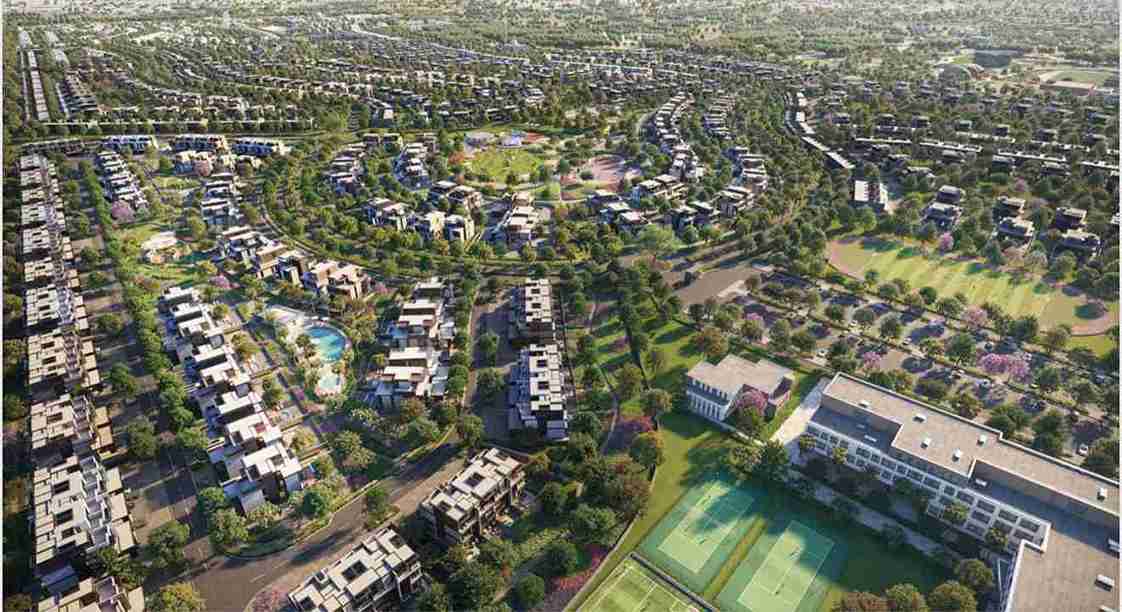
Villa-community aerial, Nad Al Sheba (indicative listing) — Early Bird Properties
Second, AI-driven valuation gives you a government-linked reference point for what a property is worth, rather than relying only on an agent's word or a portal listing price. That is a genuine transparency gain — but treat it as one input, not a verdict. Third, and most important, speed is not a substitute for scrutiny. A transaction that registers in minutes still deserves the same checks a slow one would: is the price defensible against comparable sales, is the developer sound, and — for off-plan — is your money protected. On that last point, Dubai's escrow rules are the buyer's backstop; understand how they work in how Dubai's 5% escrow retention protects you.
Frequently asked questions
What is Dubai's Tamallak+ platform?
Tamallak+ is the Dubai Land Department's digital property-transaction platform. It bundles AI-driven property valuation, instant sales registration and developer self-registration into one online flow, with no in-person visit required. It also supports the First-Time Home Buyer Programme and real-estate tokenisation. In July 2026 it won DLD the Best Pioneering Initiative Award.
Can a Dubai property really be bought in five minutes?
DLD reports that "some sales transactions" can be completed in as little as five minutes — a best-case figure for the cleanest, most-integrated deals, not a universal promise. This refers to the registration step, not the whole buying decision. Most real purchases still involve valuation, financing and due-diligence time; what has changed is that the paperwork itself is now dramatically faster.
Did Dubai Land Department win the Hamdan Flag?
DLD won the Best Pioneering Initiative Award for Tamallak+ under the Hamdan bin Mohammed Programme for Government Services, announced on 7 July 2026. The overall Hamdan Flag for 2025 was awarded to a different entity for broader government-services performance. DLD's recognition was specifically for the Tamallak+ innovation.
Does faster registration make buying property in Dubai safer?
Faster registration improves transparency and cuts paperwork friction, but it does not replace due diligence. A minutes-fast transaction still needs a defensible valuation, a verified developer and — for off-plan — escrow protection. Treat the platform's AI valuation as one reference point among several, and keep the same checks you would apply to any purchase.
What does the platform mean for off-plan and first-time buyers?
Developer self-registration streamlines how new-build sales are logged with the government, which helps off-plan transactions in particular. The platform also underpins the First-Time Home Buyer Programme, aimed at making entry-level ownership more accessible. For first-time buyers, the practical benefit is a simpler, faster, more transparent process — provided the underlying purchase still stacks up on price and protection.
The bottom line
Dubai's digital-transaction push is real, and being at the frontier of transaction speed is a genuine competitive edge for a property market that competes globally for investor capital. Just keep the reported "five minutes" in proportion: it is DLD's best-case figure for the cleanest deals, and it describes the registration step, not the wisdom of the purchase. The faster the pipe, the more the value comes from knowing what you are buying before you press confirm — which is exactly where a founder-led read of the numbers earns its keep. See the calibre of Dubai stock we handle for an example of the waterfront stock moving through this faster pipeline.
Muhammad Zohaib Saleem — Founder, Early Bird Properties (RERA / DLD ORN 37167). In Dubai real estate since 2013.
Methodology & disclosure: Award and platform details are drawn from Dubai Media Office and Dubai Land Department announcements (July 2026); performance figures (five-minute best case, 88% time reduction, 96.5% satisfaction, 59 developers, 30 banks) are DLD's own reported figures and are labelled indicative, not independently audited. Global comparison figures are illustrative modernisation cases, not a current ranking. No developer marketing fees; recommendations based solely on investor interest alignment. This is general information, not financial advice.